Multilingual site construction and SEO measures in the AI era realized with VERBARANK

July 13, 2026
|
|
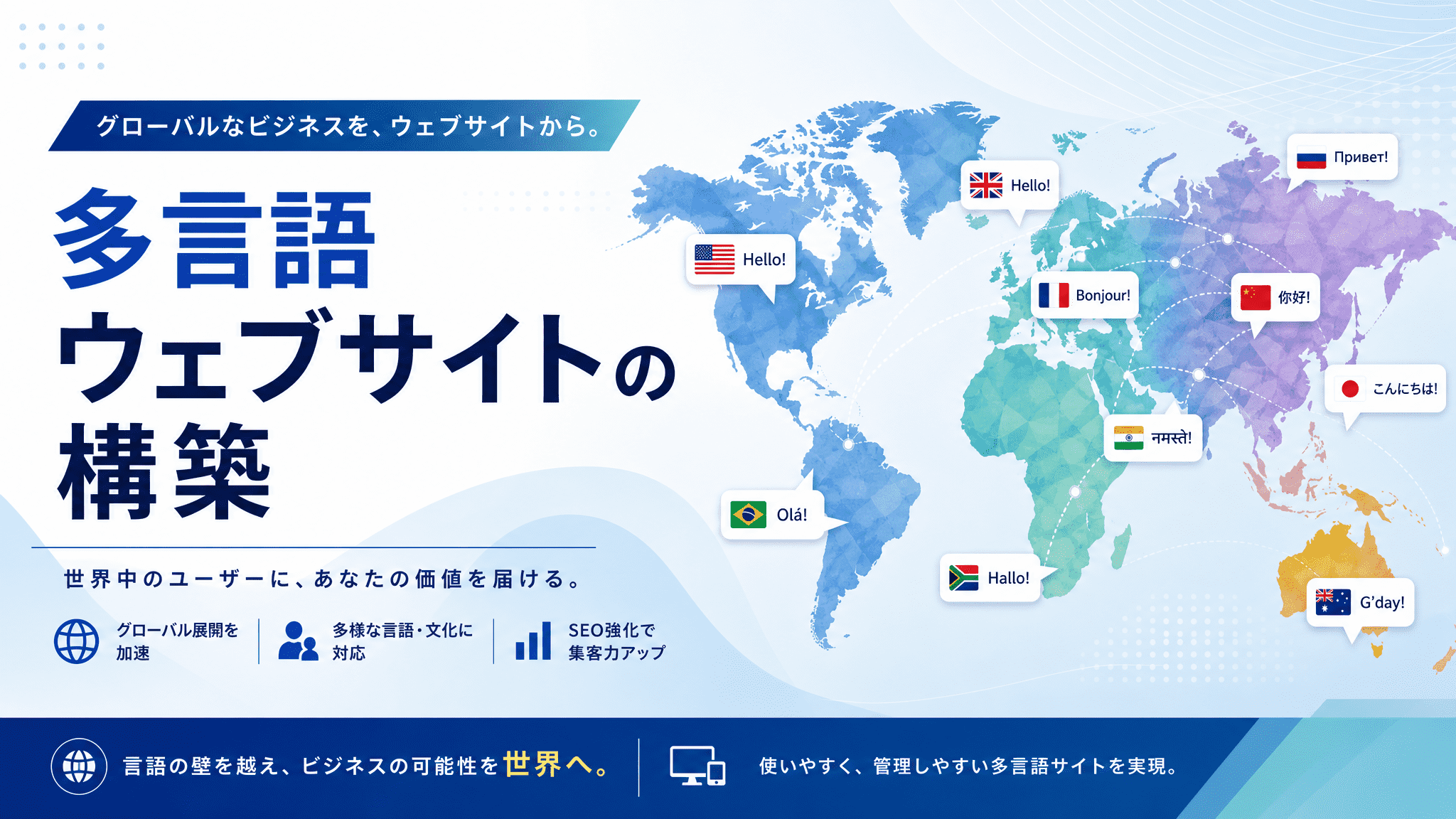
A digital graphic depicting Japanese text and national flags from various countries, representing "Multilingual Site Construction" and the development of modern multilingual websites. The icons symbolize global reach, multilingual support, SEO optimization, and adaptability in the AI era, all set against a world map background.

Table of Contents

Accessing global markets is no longer a privilege exclusive to large corporations. As of 2026, building multilingual websites is key to growth for all businesses, including small and medium-sized enterprises. This is because being cited by major AI models such as ChatGPT, Claude, and Gemini, not just ranking high in Google searches, has become an important channel for acquiring new customers. VERBARANK is a next-generation platform that makes existing websites compatible with over 120 languages in as little as 15 minutes, simultaneously implementing SEO measures for the AI era. It can be introduced without coding, and anyone can easily build high-quality multilingual content with neural translation technology boasting 90% translation accuracy.

Why is building a multilingual site key to corporate growth now?

The domestic market in Japan is mature and facing population decline. On the other hand, about 73% of internet users use languages other than English, and sustainable growth is difficult without access to global markets. By building multilingual sites, you can reach overseas customers who were previously unreachable and develop new revenue streams.

Access to global markets cannot be achieved by mere translation. It requires content optimized for each language market and technical implementation that is recognized by local search engines and AI models. Sites with appropriate multilingual SEO measures can achieve high search rankings not only in the English market but also in specific language markets such as Spanish, French, and Chinese. Even in industries with intense competition domestically, there is potential to gain first-mover advantage in overseas markets.

In the AI search era of 2026, the value of multilingual content is further amplified. Leading AI models such as ChatGPT, Claude, Gemini, Grok, Meta AI, DeepSeek, and Perplexity refer to reliable multilingual sources when providing answers to user queries. Appropriately structured multilingual content has a higher probability of being cited by these AI models, leading to increased brand awareness and acquisition of new traffic.

4 Steps to Successfully Building a Multilingual Website

Building an effective multilingual site requires a strategic approach. Instead of blindly supporting all languages, prioritizing based on business goals and phased implementation are the keys to success.

Step 1: Prioritize Target Markets and Languages

First, identify the markets most likely to be interested in your products or services. Determine the languages to prioritize by analyzing existing overseas access data, competitor expansion, market size, purchasing power, etc. Many companies start with English, but B2B companies may prioritize languages of countries where specific industries are thriving, and e-commerce sites may prioritize languages of markets with high purchasing power. Generally, English, Chinese, Spanish, French, and German are often chosen as the first five languages.

Step 2: Selecting the Technical Foundation and Building the Platform

The technical foundation of a multilingual website significantly impacts future scalability and operational efficiency. Traditionally, custom development or the introduction of a multilingual CMS was necessary, but by using a specialized platform like VERBARANK, multilingualization can be achieved by simply embedding a tag into your existing site. All technical elements required for SEO, such as automatic hreflang tag settings, language-specific URL management, and structured data implementation, are automatically handled.

Step 3: Content Localization and Cultural Adaptation

Localization that adapts to the culture and customs of each market is important, not just translation. Improving user experience by localizing details such as the meaning of colors, nuances of expressions, selection of examples, and notation of units and currencies. VERBARANK's neural translation understands context and selects appropriate expressions, significantly reducing the unnaturalness characteristic of machine translation. Industry terms and specialized expressions are also translated accurately with 90% precision.

Step 4: Continuous optimization and performance measurement

Building a multilingual website is not the end goal; it's about continuous improvement through language-specific traffic analysis, conversion rate measurement, and search ranking monitoring. Understand which language markets are performing well and which content is being evaluated positively in each language to optimize resource allocation. VERBARANK's management screen allows you to view language-specific performance at a glance and adjust translations as needed.

How to achieve top rankings in both Google Search and AI models

Ranking high on Google search and gaining citations in AI models require different approaches. However, high-quality content and appropriate technical implementation are common fundamentals, and it is possible to optimize both simultaneously.

Basics of Multilingual SEO Evaluated by Google Search

Multilingual SEO on Google Search begins with properly recognizing each language version as an independent site. By correctly implementing hreflang tags and specifying the language and target region, search engines can provide users with the appropriate language version. The content of each language version should not merely be a translation but optimized for keywords that are actually searched for in that language market. The nuance of information sought by someone searching for "多言語サイト構築" in Japanese may differ from someone searching for "multilingual website development" in English.

URL structure is also important. Choose one of the following methods and maintain consistency: subdirectory (example.com/ja/, example.com/en/), subdomain (ja.example.com, en.example.com), or country-code top-level domain (example.jp, example.com). Each method has its advantages and disadvantages, but many companies adopt the subdirectory method because domain authority is not dispersed and management is relatively easy.

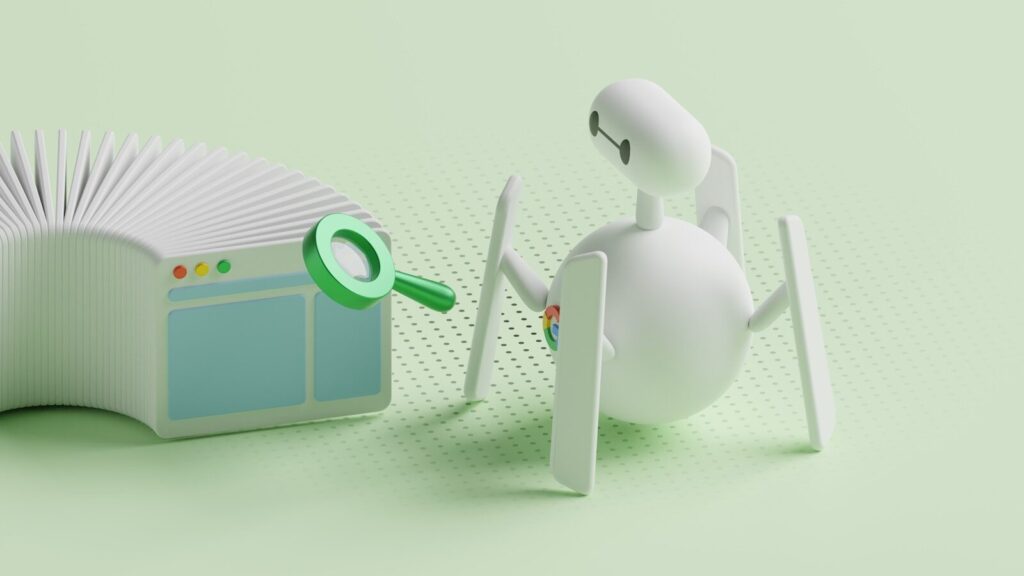
A 3D robot with four legs is observing a browser window icon with a magnifying glass against a light green background. This symbolizes the importance of SEO in the AI era.

Optimization for major AI models such as Claude, ChatGPT, and Gemini

AI models use several criteria when selecting content to cite as answers to questions. These include accuracy of information, clarity of text, degree of structuring, and authority signals. By structuring each section as an independent answer and providing a clear conclusion at the beginning, it becomes easier for AI models to cite.

Structured content such as specific numerical data, step-by-step implementation instructions, comparison tables, and checklists is easily evaluated by AI models. VERBARANK automatically generates structures that are likely to be cited by seven major AI models (Claude, Gemini, ChatGPT, Grok, Meta AI, DeepSeek, Perplexity). AI models can better understand content through appropriate implementation of structured data, addition of FAQ schema, and clear heading hierarchies.

Correct implementation methods for hreflang tags and structured data

Hreflang tags are a crucial element for communicating the relationship between pages of each language version to search engines. Implement them in the HTML header of each page or in the sitemap, ensuring all language versions mutually reference each other. This is an area where implementation errors are frequent, with common issues including missing self-references, one-way references, and incorrect language codes. VERBARANK automatically generates hreflang tags, preventing these common errors.

Structured data helps both search engines and AI models understand content. By implementing appropriate schemas for content types such as articles, products, and FAQs, the probability of displaying rich snippets increases, and the citation rate by AI models also improves. Implementation in JSON-LD format is the current standard.

How to choose URL and domain strategies by language

The strategy for language-specific URLs is chosen based on the business model and deployment plan. The subdirectory method is suitable for many companies as it is easy to implement and consolidates domain authority. The subdomain method is effective when you want to technically separate each language version or operate on different servers. Country-code top-level domains are selected when you want to deeply commit to a specific national market or enhance credibility as a local company.

VERBARANK offers the flexibility to support any strategy you choose. It automatically generates appropriate language-specific URLs while maintaining your existing URL structure and handles all technical settings.

Why high-quality translation impacts business results

The success of a multilingual website largely depends on translation quality. Poor translations can damage brand image, erode user trust, and lower conversion rates. Conversely, high-quality translations facilitate natural communication with local users and are valued by both search engines and AI models.

Difference and appropriate use of machine translation and neural translation

Traditional machine translation was a method of replacing words and phrases dictionary-style. While it also performs processing based on grammatical rules, its ability to understand context is limited. As a result, it often generates literal and unnatural expressions, and the translation accuracy for specialized terms and idioms is low.

Neural translation uses deep learning technology to translate while considering the context of the entire sentence. It learns from a large amount of parallel data to generate more natural and fluent expressions. By understanding meaning at the sentence and paragraph level, rather than the word level, it is more likely to reflect nuances and cultural backgrounds. The neural translation adopted by VERBARANK achieves 90% translation accuracy, significantly reducing the need for post-editing by human translators.

Context-aware translation improves user experience

Excellent translations not only convert languages but also convey intent. The appropriate tone and expression vary depending on the content type, such as product descriptions, blog posts, and landing pages. Translation systems that understand context choose polite expressions for formal situations and friendly language for casual content.

Users trust content written naturally in their own language, leading to longer dwell times and improved conversion rates. Conversely, mechanical and unnatural translations cause users to leave the site immediately. VERBARANK's neural translation selects appropriate expressions considering context, generating readable and persuasive content.

What is the technology that achieves 90% translation accuracy?

VERBARANK's 90% translation accuracy is achieved through a combination of the latest Neural Machine Translation (NMT) engines and proprietary optimization technologies. We employ ensemble learning, which compares outputs from multiple translation models and selects the most appropriate expression. Furthermore, we integrate industry-specific terminology dictionaries to maintain consistency of terms according to context.

Translation quality is evaluated by combining objective metrics such as BLEU score and COMET score with feedback from human evaluators. Through continuous learning, the translation models are improved daily and adapt to new expressions and terminology.

Accurate translation methods for industry jargon and specialized expressions

In highly specialized industries such as medical, legal, financial, and technology, accurate terminology translation is particularly important. Mistranslations can also lead to compliance risks. VERBARANK utilizes industry-specific terminology databases to select appropriate translations based on context.

Furthermore, the custom glossary registration feature allows for consistent translation of company-specific product names, service names, and brand terms. There is also an option to keep important terms in their original language without translation, maintaining the consistency of global brands.

Three Challenges and Solutions in Multilingual Website Operation

Multilingual website construction and operation involve technical, operational, and cost challenges. Understanding and appropriately addressing these is the key to success.

Challenge 1: How to overcome development cost and time constraints?

Traditional multilingual website construction took several months to over a year to develop and required costs ranging from millions to tens of millions of yen. This was because the design, development, and testing of each language version of the site had to be done individually. This hurdle was extremely high for small and medium-sized enterprises.

VERBARANK fundamentally solves this problem. By simply embedding a simple tag into your existing site, multilingualization can be completed in as little as 15 minutes. No coding is required, and no technical expertise is necessary. You can significantly reduce initial costs and start global expansion in a short period. The subscription-based pricing model also minimizes the risk of initial investment.

Challenge 2: How to minimize the burden of update work

A major challenge for multilingual websites is the effort required for content updates. Each time an article is published, versions need to be created for multiple languages, and the publication process must be carried out for each. For websites with frequent updates, this workload can strain operations.

When content in the original language is updated, VERBARANK automatically updates all language versions. Since translation is also automated, manual work is minimized. You can review the translated content on the management screen and make minor adjustments if necessary, but in many cases, the quality is sufficient as is. Simultaneous deployment to over 120 languages with a single update operation dramatically improves operational efficiency.

Challenge 3: Addressing the complexity of technical SEO settings

Multilingual SEO involves many technical elements such as hreflang tags, sitemaps, structured data, and URL normalization. If these are not implemented correctly, search engines cannot properly recognize each language version, and SEO effects will not be achieved. For staff without technical knowledge, these settings are a major hurdle.

VERBARANK automatically handles all technical SEO settings. It processes complex technical elements such as hreflang tag generation, multilingual sitemap creation, structured data implementation, and URL management in the background, so users do not need to be aware of them. The structure required for AI model optimization is also automatically generated, making it effective for both Google Search and AI citations.

5 Reasons Why VERBARANK is Chosen

VERBARANK is a next-generation platform that simultaneously achieves multilingual website construction and SEO measures for the AI era. The reasons why companies choose it are clear.

Simple implementation process with setup completed in as little as 15 minutes

Building traditional multilingual sites required specialized development skills and a long time. VERBARANK overturns this common notion. Anyone can build a multilingual site in four simple steps. Just add the provided tags to your existing site's HTML, select the target languages in the management screen, customize the design, and publish. No technical knowledge is required, and a global site can be completed in as little as 15 minutes.

Comprehensive solutions supporting over 120 languages

We support over 120 languages, not just major ones like English, Chinese, and Spanish. You can reach any market worldwide, including Asia, Europe, the Middle East, Africa, and South America. It's also possible to find niche markets with less competition in specific regions or language markets and gain first-mover advantages. Adding or removing languages can be easily done from the management screen, allowing for flexible adaptation to changes in market strategy.

Automatically generate structures that are easily cited by 7 major AI models

In the AI search era of 2026, ranking high on Google search alone is insufficient. Being cited by major AI models such as Claude, Gemini, ChatGPT, Grok, Meta AI, DeepSeek, and Perplexity has become a new source of traffic. VERBARANK automatically generates structured data, clear heading hierarchies, FAQ schema, and specific numerical data that these AI models prefer. Content is optimized to be easily understood and cited by AI models.

A management screen that anyone can operate without code

The intuitive management screen allows marketers and content creators to operate without relying on a technical team. All tasks, such as adding languages, checking and adjusting translations, and analyzing performance, can be completed within the browser. It also includes features to check translation quality and make adjustments as needed, ensuring brand tone consistency. It's also possible to efficiently manage operations by dividing roles among multiple team members.

Neural Translation Technology Achieving 90% Translation Accuracy

We achieve 90% translation accuracy through neural translation technology that understands context, not just simple machine translation. High-quality translations, such as natural and easy-to-read expressions, accurate translation of industry terms, and reflection of cultural nuances, improve business results. This prevents a decline in brand image and conversion rates due to low translation quality.

Techniques to Maximize SEO Effects of Multilingual Websites

Simply building a multilingual website is not enough to achieve sufficient SEO effects. A strategic approach optimized for each language market is necessary.

Keyword strategies optimized for each language market

Simply translating Japanese keywords directly may result in a mismatch with the keywords searched in each language market. We investigate what terms local users are searching for and select the optimal keywords for each language version. By analyzing search volume, competitive landscape, and user intent, we identify keywords that should be prioritized.

Localized keyword strategies not only improve search rankings but also lead to better conversion rates. By creating content in the words users actually use, you can build empathy and trust. VERBARANK's management dashboard allows you to check keyword performance by language, helping you optimize your strategy.

How to support local search engines

While Google is the dominant search engine globally, other search engines are prevalent in certain regions. Baidu is dominant in China, Yandex in Russia, and Naver in South Korea. To maximize effectiveness in each linguistic market, it's necessary to also cater to these local search engines.

VERBARANK also supports the technical requirements of major local search engines. It guides you through necessary settings such as appropriate meta tags, sitemap submission, and registration with each search engine's webmaster tools.

Importance of site loading speed and CDN utilization

In multilingual websites, users from different regions access the site from various locations worldwide. Users physically distant from the server will experience slower page loading times. Display speed is a crucial factor for SEO and directly impacts user experience.

By utilizing a CDN (Content Delivery Network), content is cached in data centers worldwide and delivered from the location closest to the user. VERBARANK integrates with a global CDN, ensuring fast loading speeds regardless of the user's region. Technologies for performance improvement, such as image optimization and code compression, are also automatically applied.

Improving AI Citation Rate with Structured Data

Structured data helps both search engines and AI models understand content. By implementing appropriate schemas for content types such as articles, products, FAQs, and reviews, the probability of displaying rich snippets increases, and the citation rate by AI models also improves.

VERBARANK automatically generates appropriate structured data for each language version. Language attributes are also set correctly, allowing AI models to recognize each language version as independent content. Necessary schemas such as FAQ schema, Article schema, and Organization schema are comprehensively implemented.

From Implementation to Operation: VERBARANK Utilization Flow

Implementing and operating VERBARANK is comprised of 4 simple steps. Anyone can build and effectively operate a multilingual site without technical expertise.

Initial Setup: From tag embedding to language settings

After registering with VERBARANK, add the provided dedicated tag to your existing site's HTML. If you are using a CMS like WordPress, you can easily add it through the header or footer editing function. Once the tag is added, select the languages you want to support in the management screen. We recommend starting with languages that have high priority based on your business strategy, such as English, Chinese, and Spanish.

Customize the design of the language switcher to match your site's design. You can choose from multiple styles, including dropdowns, flag icons, and text links. Once the settings are complete, preview the display of each language version and publish if there are no issues.

Content Optimization: Translation adjustments in the management dashboard

VERBARANK automatically generates high-quality translations, but there are times when you may want to adjust brand-specific terminology or special expressions. The management screen allows you to review translations for each language version and edit them as needed. By fine-tuning important keywords, product names, and brand messages based on marketing strategy, the content becomes more effective in each market.

By registering a custom glossary, specific terms can be translated consistently. Company names, product names, and service names can also be kept in their original language without translation. This helps maintain consistency for global brands.

Continuous Operation: Mechanisms for Automatic Updates and Quality Maintenance

When you update content in the source language, VERBARANK automatically updates all language versions. Any update, such as publishing a new article, editing an existing page, or changing product information, is automatically deployed in multiple languages. This eliminates the need to manually update each language version, dramatically improving operational efficiency.

Translation quality is continuously monitored and improved. The translation model continues to learn based on user feedback and behavioral data. It also adapts to new expressions and terminology, always reflecting the latest language trends.

Performance Measurement: Traffic Analysis by Language

The management dashboard allows you to check key metrics such as traffic, time on site, and conversion rates by language. Understand which language markets are performing well and which content is valued in each language to optimize your strategy. You can allocate more resources to high-performing languages, or reconsider the strategy for low-performing languages, or temporarily lower their priority.

More detailed analysis is possible through integration with Google Analytics and Google Search Console. You can check search rankings, click-through rates, and search queries for each language version to continuously improve your SEO strategy.

Best Practices Learned from Successful Multilingual Site Construction Case Studies

By observing how actual companies utilize multilingual sites and achieve business results, effective strategies become apparent.

Successful Patterns for B2B Companies to Acquire Overseas Leads

A software company expanded its site into four languages: English, Chinese, Spanish, and French, tripling its lead generation from overseas. By regularly publishing blog content optimized for keywords searched in each language market, they increased industry recognition. They established credibility by providing case studies that focused on local business practices and challenges. The automatic update feature of VERBARANK allowed for instant multilingual deployment of content created in Japanese, significantly improving the efficiency of their content marketing.

Case Study: Expanding Cross-Border Sales for E-commerce Sites

An apparel e-commerce site, supporting English, Korean, Chinese, and Thai, achieved a fivefold increase in sales in the Asian market. By providing product descriptions, size guides, and shipping information in each language, they lowered barriers to purchase. They also adapted product presentation to the trends and preferences of each language market, improving conversion rates. Through multilingual SEO, they achieved high rankings in Google searches in each country, attracting customers while reducing advertising costs.

How Small and Medium-sized Enterprises Achieved Global Expansion

A manufacturing company with 30 employees built English and German sites and began exporting to the European market. Because they needed to expand into multiple languages with limited resources, VERBARANK's automatic translation and simple operation were decisive factors. They multilingualized technical specifications and product catalogs, leading to an increase in inquiries from overseas purchasing managers. Initially, it was only in English, but they added a German version for the German-speaking market, where inquiries were frequent, and the deal closing rate improved.

Failure patterns to avoid and countermeasures

Companies building multilingual websites share common failure patterns. The most frequent is brand image degradation due to low-quality translations. This occurs when free machine translation is used to cut costs, resulting in unnatural and incorrect content being published. This problem can be avoided by using high-precision neural translation like VERBARANK.

Errors in technical SEO settings also occur frequently. Due to implementation errors in hreflang tags, duplicate content issues, and failures in URL normalization, search engines cannot properly recognize each language version, and SEO effects will not be achieved. Using a specialized platform can automatically resolve these technical challenges.

Another failure pattern is neglecting updates. Many sites have content in the original language that is frequently updated, while the versions in other languages remain outdated. This erodes user trust and lowers search engine rankings. Choosing a platform with automatic update functionality is important.

Multilingual SEO Trends and AI Search Adaptation from 2026 Onwards

The search environment is rapidly changing, and multilingual SEO strategies must also evolve. Understanding the trends beyond 2026 and taking a proactive approach will be a source of competitive advantage.

Changes in Search Behavior Due to Generative AI

With the spread of generative AI such as ChatGPT, Claude, and Gemini, user search behavior is changing significantly. Instead of traditional keyword searches, users ask complex questions in a conversational format, and AI integrates information from multiple sources to generate answers. In this environment, creating content that AI models cite is more important than ranking first for specific keywords.

AI models prefer content that is authoritative, clearly structured, and includes specific data or examples. Content where each section functions as an independent answer and directly addresses the user's question is more likely to be cited. VERBARANK automatically optimizes these elements, generating content structures suitable for the AI search era.

The Relationship Between Voice Search and Multilingual Support

With the spread of voice assistants, the use of voice search is increasing. Voice search uses more natural, conversational expressions and often involves question-based queries. Multilingual sites need to support voice search patterns for each language. In Japanese voice search, colloquial expressions like "Where is a restaurant nearby?" are used, but in English, there's a tendency for slightly more formal expressions like "Where is the nearest restaurant?"

By understanding voice search patterns in each language market and enriching FAQ and conversational content, the probability of appearing in voice search increases. Implementing structured data speaker schema is also effective.

Content Strategy in the Era of Zero-Click Search

On Google Search, zero-click searches, where users get answers directly on the search results page without clicking on a site, are increasing. Features like featured snippets, knowledge panels, and People Also Ask boxes allow information to be complete on the search results page itself. While this reduces traffic to your site, it also presents an opportunity to increase brand awareness.

Content strategy in the zero-click search era aims to provide clear and concise answers to questions and be selected as a featured snippet. At the same time, it provides detailed or related information after the answer to show the value of clicking if the user wants to know more. For multilingual sites, this strategy should be deployed in each language version to enhance brand recognition in each market.

Characteristics of content chosen by AI

Content cited by AI models shares common characteristics: information is up-to-date and accurate, includes specific numerical data and examples, has a clear structure and headings, and comes from authoritative sources. Content that is not too long or too short, and directly answers the question, is preferred.

VERBARANK automatically generates content structures that consider these elements. It implements appropriate structured data, heading hierarchies, and FAQ schemas for each language version, making it easier for AI models to understand and cite the content. Optimization with seven major AI models increases the likelihood of being cited across a wide range of AI platforms.

FAQ

How long does it take to build a multilingual website?

With VERBARANK, you can build a multilingual website in as little as 15 minutes. Simply add the provided tag to your existing site and select the target languages in the management screen. Tasks that traditionally took months or even over a year can be completed in a short time without technical expertise. While there may be slight variations depending on content volume and the number of languages, basic multilingualization can be achieved instantly.

What are the precautions when multilingualizing an existing website?

You need to decide whether to multilingualize while maintaining the existing site's URL structure or migrate to a new URL structure. When adopting a subdirectory method, the migration is relatively smooth as it does not affect existing URLs. It is also important to check if the existing content is structured in a way that is suitable for multilingualization. VERBARANK can utilize the existing site structure as is, eliminating the need for large-scale reconstruction.

What is important for ranking high on both Google Search and AI models?

High-quality content, appropriate technical implementation, and clear structure are fundamental. For Google Search, factors like hreflang tags, mobile optimization, page speed, and backlinks are important. For AI models, clear answers to questions, specific data and examples, structured data, and authority signals are evaluated. VERBARANK comprehensively optimizes these elements, performing effectively on both platforms.

How is 90% translation accuracy achieved?

VERBARANK combines the latest neural machine translation engines with proprietary optimization technology. It employs ensemble learning, comparing outputs from multiple translation models to select the most appropriate expression. It integrates industry-specific terminology dictionaries to choose appropriate translations based on context. Through continuous learning, translation quality improves daily.

Is it possible for small businesses to operate multilingual websites?

Yes. VERBARANK is designed so that anyone can operate a multilingual site without technical expertise or a large development team. Automatic translation, automatic updates, and an intuitive management screen enable global expansion even with limited resources. The subscription-based pricing model also reduces initial investment.

Which languages should be prioritized?

It depends on your business goals and target market, but many companies start with English. This is because English is the common language of international business and allows for the widest reach. Next, we analyze existing overseas access data, competitor expansion status, market size, purchasing power, etc., and add languages such as Chinese, Spanish, French, and German. With VERBARANK, you can flexibly adjust according to your strategy because adding or deleting languages is easy.

How long does it take for a multilingual site to show SEO effects?

Generally, it takes about 3 to 6 months for the effects of multilingual SEO to become apparent. Search engines need time to index and evaluate each language version. However, in less competitive language markets or specific niches, effects may appear sooner. Continuous content updates and optimization will gradually increase the impact. For AI citations, properly structured content tends to show effects relatively early.

The AI Era SEO is GEO to.

Register for free and we will translate your site into your desired language.
Up to 10,000 words are free, so If it's a small site Within the free limit We can fully accommodate you. Please feel free to use it.

2026 will be the year AI models cite you as a success. will be the key. Register for free today and Get ahead of the competition and start with multilingual SEO.
An abstract blue geometric logo on a light gray background, composed of angular shapes and lines, reminiscent of a stylized fox or wolf head. Ideal for a modern interface management menu icon.
VERBARANK
Multilingual SEO & GEO Platform for the AI Era. Structure content in over 120 languages and build websites cited by major AI models like ChatGPT, Gemini, and Claude.
Copyright © 2026 VERBARANK. All Rights Reserved.